Book of Rites
Confucian classic of rites, social forms, and ceremonial conduct.

The Book of Rites, also known as the Liji (禮記) or Classic of Rites (Lǐjīng), is a collection of texts describing the social forms, administrative structures, and ceremonial rites of the Zhou dynasty as interpreted during the Warring States period and early Han dynasty. It forms part of the 'Three Li' (Sānlǐ) and the ritual component of the Five Classics, a foundational set of texts in the Confucian tradition.
- field
- Confucian ritual text
- known_for
- Part of the Five Classics; source of the Great Learning and Doctrine of the Mean
- language
- Classical Chinese
- compilation_period
- Warring States period to early Han dynasty
- traditional_editor
- Dai Sheng (1st century BCE, disputed)
Lore & Background
The Book of Rites is a diverse compilation of uncertain origin and date, lacking a consistent overall structure. Some sections define ritual terminology, while others contain details about Confucius's life and teachings. Portions have been traced to pre-Han works such as the Xunzi and Lüshi Chunqiu, and other sections were likely composed during the Former Han period. However, later scholarship questions this account due to lack of reliable evidence.
Reader's Guide
The Book of Rites is significant as a core Confucian text that defines li (禮)—rites, ceremonial practices, and rules of conduct—which Confucius described as encompassing all traditional forms providing a standard of conduct. The text emphasizes that li should reflect piety and respect for others, and that a return to these standards would help stabilize society. Several chapters provided the foundation for the Great Learning and the Doctrine of the Mean, which during the Song dynasty were elevated by Zhu Xi to become part of the Four Books.
Did You Know?
- The Book of Rites is one of the 'Three Li' along with the Rites of Zhou and the Book of Etiquette and Rites.
- The Classic of Music survives only in fragments, primarily within the 'Record of Music' chapter of the Book of Rites.
- Zheng Xuan's annotated edition of 49 books became the standard version and remains so today.
Material Foundations of the Written Word
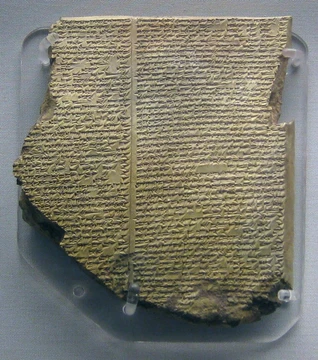
The ancient written record was far more varied in its physical form than modern readers might assume. Scribes and record-keepers inscribed their work onto stone surfaces, pressed it into clay tablets, brushed ink across papyri, carved characters into palm leaves, and even hammered text into metal. These media carried an equally wide range of content: religious documents and scientific treatises sat alongside tales, poetry, dramatic plays, royal edicts, and formal declarations. The sheer breadth of subject matter—spanning the sacred, the practical, the artistic, and the governmental—shows that ancient literate cultures did not separate 'literature' from 'administration' or 'science' the way modern categories might. A single civilization could produce a hymn to a deity, a mathematical papyrus, a legal code, and a personal autobiography within a few centuries, all preserved on different substrates. This material diversity means that what survives to us is shaped as much by the durability of the medium as by the cultural importance of the text itself.
Fragility and the Gap in the Record
Before writing became widespread, communities relied on oral transmission to preserve stories, laws, and sacred narratives. Yet this mode of preservation was inherently precarious; many oral compositions faded from memory and left no trace at all. Even after texts were committed to physical media, survival was far from guaranteed. An unknown number of written works have perished over the millennia, destroyed by the simple passage of time, environmental decay, conflict, or neglect. The result is a literary record riddled with gaps. We know that certain works existed because later authors reference them or because fragments survive, yet the full texts are gone. This loss is not limited to one civilization or one era; it cuts across every tradition represented in the ancient corpus. The texts we can read today represent only a fraction of what was once composed, and the silence where lost works should be reminds us that the ancient literary heritage is, by its very nature, incomplete.
A Deep Chronological Arc
The written literary record stretches back to approximately 2600 BC, when classical Sumerian scribes produced texts such as the Instructions of Shuruppak and the Kesh temple hymn at Abu Salabikh. From that early point, literary production continued unbroken across successive Bronze Age periods and into the Iron Age and Classical Antiquity. The Middle Bronze Age (roughly 2000 to 1601 BC) yielded works like the Egyptian Tale of the Shipwrecked Sailor, the Akkadian Laws of Eshnunna, and the Sumerian Lament for Ur. The Late Bronze Age brought the Hittite Code of the Nesilim, the Ugaritic Baal Cycle, and the Sanskrit Rig Veda. By the Iron Age, traditions such as the Vedic Sanskrit Aranyaka and the Akkadian Epic of Erra appeared, while Classical Antiquity saw the composition of the Iliad, the Odyssey, Hesiod's Theogony, and the Chinese Classic of Changes. This unbroken chronological thread, spanning nearly four thousand years, demonstrates that literary creation was a continuous human activity long before the modern era.
A Multilingual, Multicultural Tapestry
What strikes the reader of the ancient corpus is the remarkable parallelism across civilizations separated by geography and language. Sumerian scribes composed the Debate between sheep and grain and the Curse of Agade; Egyptian writers produced the Satire of the Trades and the Eloquent Peasant; Akkadian scholars drafted the Code of Hammurabi stele and the Epic of Gilgamesh in its earliest complete form around 1800 BC. Hittite, Ugaritic, and Sanskrit traditions each generated their own cycles of myth, law, and hymn. Chinese literary output included the Classic of Poetry (Shījīng) around 1000 BC and the Classic of Changes in the ninth century BC. Greek authors of the eighth and seventh centuries BC gave the world the Trojan War cycle, Hesiod's Works and Days, and the lyric poets Archilochus, Alcman, and Semonides. These parallel streams—legal codes, royal autobiographies, mathematical papyri, divine hymns, philosophical dialogues—reveal a shared human impulse to record, interpret, and celebrate experience, expressed through an astonishing variety of local forms.
Frequently Asked Questions
What is the Book of Rites?
The Book of Rites (Liji) is a collection of classical Chinese writings that lay out the social customs, governmental frameworks, and ceremonial practices linked to the Zhou dynasty. It was put together by scholars working during the Warring States period and the early Han dynasty, blending older traditions with newer interpretations of how society ought to function.
What role does the Book of Rites play in the Confucian canon?
It acts as the ritual anchor of the Five Classics and belongs to the 'Three Li' grouping, giving Confucian ideals of propriety a concrete, practical form for daily life and governance. It also contains two of the most widely studied Confucian treatises, the Great Learning and the Doctrine of the Mean.
Who is traditionally credited with editing the Book of Rites?
Dai Sheng, a first-century BCE scholar, is the name most commonly associated with the text's editorial work, though modern researchers dispute whether he actually compiled it or simply passed along an earlier anthology. The collection clearly reflects layered contributions spanning roughly three centuries of Warring States and early Han intellectual activity.
Why is the Book of Rites considered so important?
It codified the ceremonial and social norms that shaped Chinese civilization for centuries, touching everything from imperial administration to household ethics. Because it formed part of the Five Classics, it became a required reading for scholars studying for the civil service examinations, embedding its values deep into the administrative core of Chinese governance.
More in Ancient Histories And Epics 1-17
Spotted an error? Know more?
This is a living reference — every entry is fact-audited, and reader corrections feed straight into our audit queue. Suggest an edit · See this site's audit record